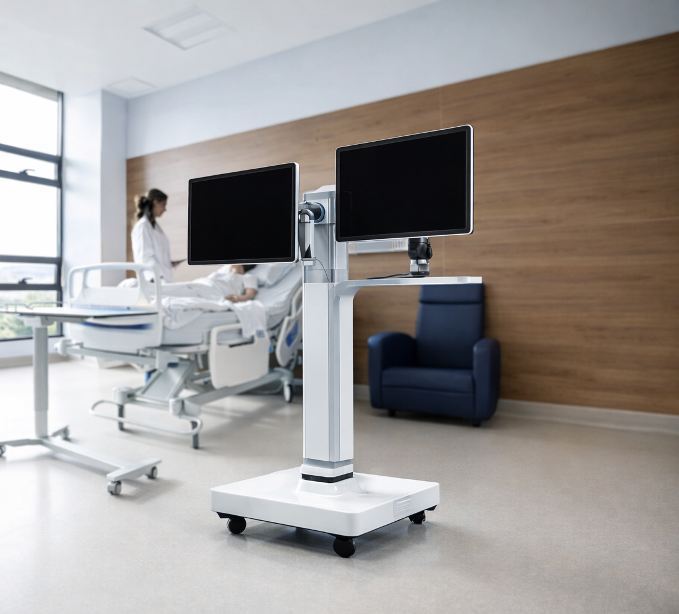
Support Neurocub
Helping more people access structured neurocognitive rehabilitation support.
Neurocub is built around people who may need sustained cognitive engagement during neurological recovery. Continued support allows us to expand the tools, infrastructure, and human resources needed to make that work available to more patients and families.
Why This Support Matters
Recovery after stroke, coma, traumatic brain injury, and other neurological conditions can continue for months or even years. But the early stages of recovery can be especially important. After a neurological injury, the brain can enter a period of heightened neuroplasticity — a time when it may be particularly responsive to rehabilitation, repeated practice, and structured engagement.
This is not a hard deadline. Meaningful recovery can continue long after the early months. But long gaps without appropriate rehabilitation during this period can mean losing valuable opportunities to build function when the brain may be especially ready to adapt.
The challenge is access. Many people cannot receive as much neurocognitive rehabilitation as they may need. Specialist time is limited, therapy may only be available for part of the day or week, and families are often left trying to maintain meaningful cognitive engagement on their own.
Neurocub is being developed to help reduce that gap. Through structured cognitive activities, guided sessions, patient-facing technology, operator support, and collaboration with families and care teams, our goal is to make consistent neurocognitive engagement available to more people between and alongside specialist-led rehabilitation.
Providing that support requires people, equipment, software, infrastructure, and continued development. If you are looking for additional support for a loved one or someone in your care, you are welcome to contact us. And if you are in a position to help others gain access to these resources, your support can help us reach more patients when time may matter most.
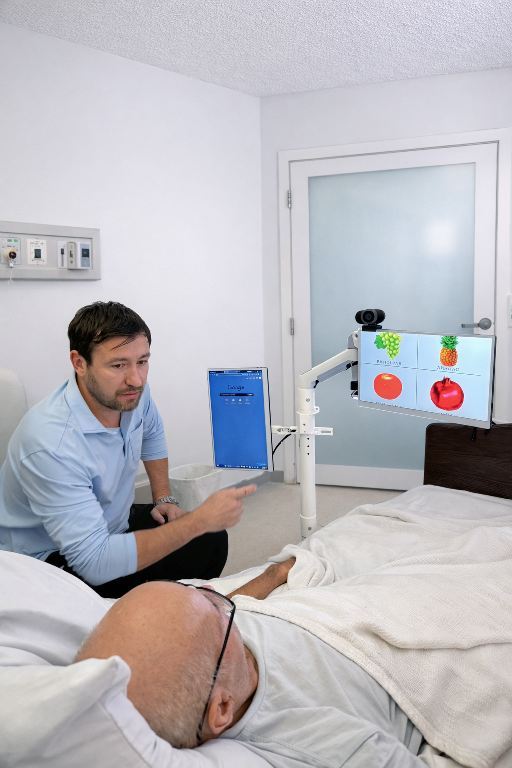
Real bedside Neurocub session.
A Real Neurocub Session
This short video shows a real Neurocub session conducted at the bedside. The patient works through simple visual and cognitive activities on the Neurobot station while the session is supported and monitored.
Depending on the person’s condition and care setting, support can be provided by an operator who is physically present with the patient or, where appropriate, by an operator working remotely together with a family member, caregiver, or clinical team.
The operator helps start the session, explain or repeat instructions when needed, maintain a comfortable pace, and support the patient throughout the interaction. The Neurocub platform provides the structured activities, records the session, and helps turn repeated interactions into a clearer picture of the person’s progress over time.
For some people, one session is only a small step. Meaningful support may require regular interaction over weeks or months. That is why access to equipment, operator time, software, infrastructure, and continued development matters.
Helping More People Receive Continued Support
Every person’s recovery path is different. Some may need structured cognitive interaction for weeks, while others may benefit from continued support over a much longer period.
Our goal is to make that support easier to access — whether through the Acalit mobile platform, Neurocub clinical tools, equipment, guided sessions, or collaboration with rehabilitation and care teams.
Support for Neurocub helps cover the practical resources behind this work: equipment, operator time, platform development, hosting and infrastructure, clinical deployment, and the continued improvement of patient-facing tools.
For us, the goal is simple: when a person needs additional neurocognitive support, lack of resources should not be the reason we are unable to help.
Support Neurocub
If you would like to help us continue this work and make these resources available to more people, you can choose a contribution below.
Selected contribution: $1,000
Contributions support the development and operation of the Neurocub platform and the resources used to expand access to neurocognitive rehabilitation support.
Contributions are not represented as tax-deductible charitable donations.
